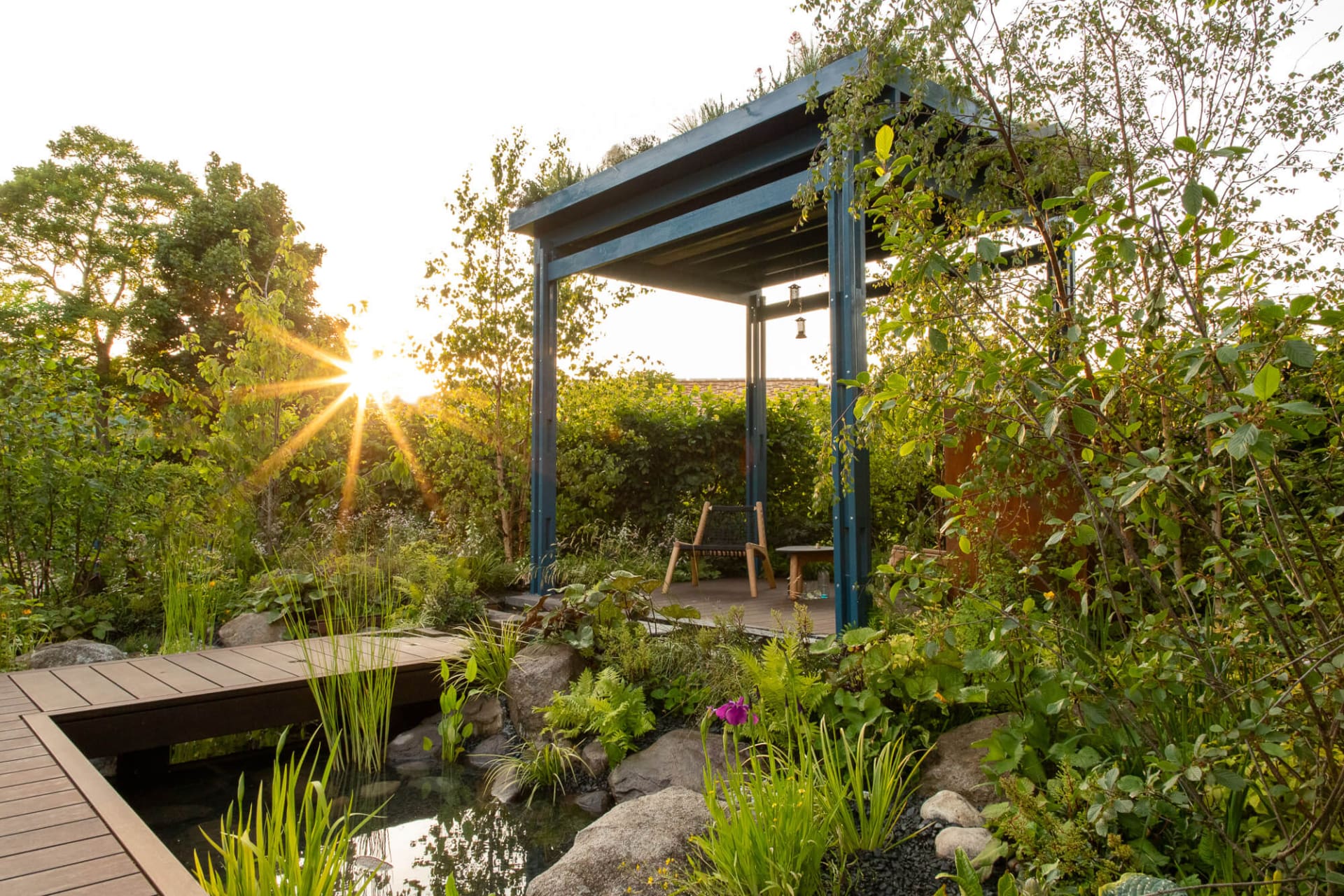
Got hay fever? You too can have a plant-filled garden
Spring and summer gardens can be challenging for people with hay fever (seasonal allergic rhinitis), asthma, and eczema. In addition, recently milder conditions are starting earlier and extending into late autumn. As a result, allergy symptoms and discomfort may last for longer periods.

What can cause allergic reactions in gardens?
MOULD
In gardens, mould is often associated with spores that are given off by fungi and tend to be found in compost heaps, decaying leaves on borders and on decaying timber structures.
POLLEN
Male flowers: Pollen is only produced by ‘male’ plants or plants that are monoecious – that is plants that produce flowers that contain both male and female parts. Pollen is high in protein, which makes it very allergenic, driving hay fever, asthma or eczema symptoms.

WIND VERSUS INSECT-POLLINATED FLOWERS
Pollen is transferred from the male to the female flower parts either by wind or by insects. Wind-dispersed pollen tends to be finer and clearly moves around in the air. In contrast, pollen that is transferred by insects tends to be stickier and heavier and generally are not airborne, so are less likely to irritate people with respiratory problems (source: allergyuk.org).
Timing
Pollen tends to be at its highest levels first thing in the morning as the air warms and later in the day as the air cools, so avoid being outside during this time.
Plants to avoid
- Trees and shrubs that can be found in gardens that have catkins, such as birch, hazel, and willow, as well as privet (Ligustrum) hedges, and ivy
- Ornamental and native grasses that are allowed to flower
- Plants that have either only male flowers or are monoecious (have both male and female flowers)
- Scented plants

So how can you avoid and/or manage your allergic reactions?
Design your garden
Given that plants offer so many benefits – to us and to wildlife – we advocate adding the right kind of plants and plant certain types of hedges that could trap pollen coming into the garden from outside – so that even with hay fever you can benefit too.
Low allergen plants
- Include plants* that are female and are insect pollinated (not wind pollinated) – preferably on ranked 1 to 2 on the OPAL system (see list below for some suggestions)
- Avoid plants as described above
- Unscented plants
- Plant a hedge of female evergreen plants such as Taxus baccata ‘Fastigata’or Ilex species (holly) on the windward side of your garden. Here it can act as a barrier, catch airborne pollen, dust and mould, clean the air and offer a good place for wildlife!
Regularly cut or replace your lawn
- Regularly cutting your lawn will prevent the grass flowers, which produce the fine-wind-pollinated pollen, from developing.
- Alternatively, replace your lawn with flowering plants that are insect pollinated or replace with gravel or deck and create planted borders full of plants that are low in allergens.
We do NOT advocate replacing your lawn with artificial turf – recent research is showing that artificial turf that you would typically find in a domestic garden gives off certain chemicals (PFAS) – see Reference 2 in Further Reading. This is different from the chemicals given off from the rubber crumb associated with artificial sports-field pitches, which is not used in domestic gardens. As yet, we do not know the effects of the chemicals, such as PFAS from domestic artificial turf has on people, let alone those with allergies, so best to keep with a lawn or low-allergen plants and gravel or a deck. - For decks, we recommend selecting naturally durable timber, such as larch or oak. Or you could use a modified timber such as thermowood (thermally treated pine) or accoya/kebony. None of these timbers have been treated with synthetic chemicals and will have a long life without risking potential allergic reactions.
*Please note that before you add any plants to your garden, you need to check the soil type and pH as well as consider how sunny/shady it is, and whether it is hardy enough. The plants suggested below would grow in the northern part of the UK/ Scotland happily.
Examples of low allergen plants
We have selected a few that would grow in Scotland and are ranked as some of the best for low allergens on the Ogren Plant Allergy Scale (OPALS). Those ranked 1 to 3 [on scale 1 – best to 10 worst] are given below. See References 3 & 4 in Further Reading.

Small trees
Acer rubrum ‘October Glory’
Amelanchier laevis
Aronia arbutifolia
Ilex sp. (holly) – female only
Malus – domestic & crab apple trees – female only (3 to 4 OPAL rank)
Prunus domestica – plum tree – female only
Ptelea triloba – female only
Taxus baccata ‘fastigata’ (female form)

Shrubs
Aucuba japonica (female only)
Chimonanthus praecox
Choiysa ternata
Enkianthus
Hydrangea macrophylla
Potentilla fruiticosa
Ribes – currants, gooseberries -female only
Skimma – female only
Viburnum – deciduous or sterile cultivars only
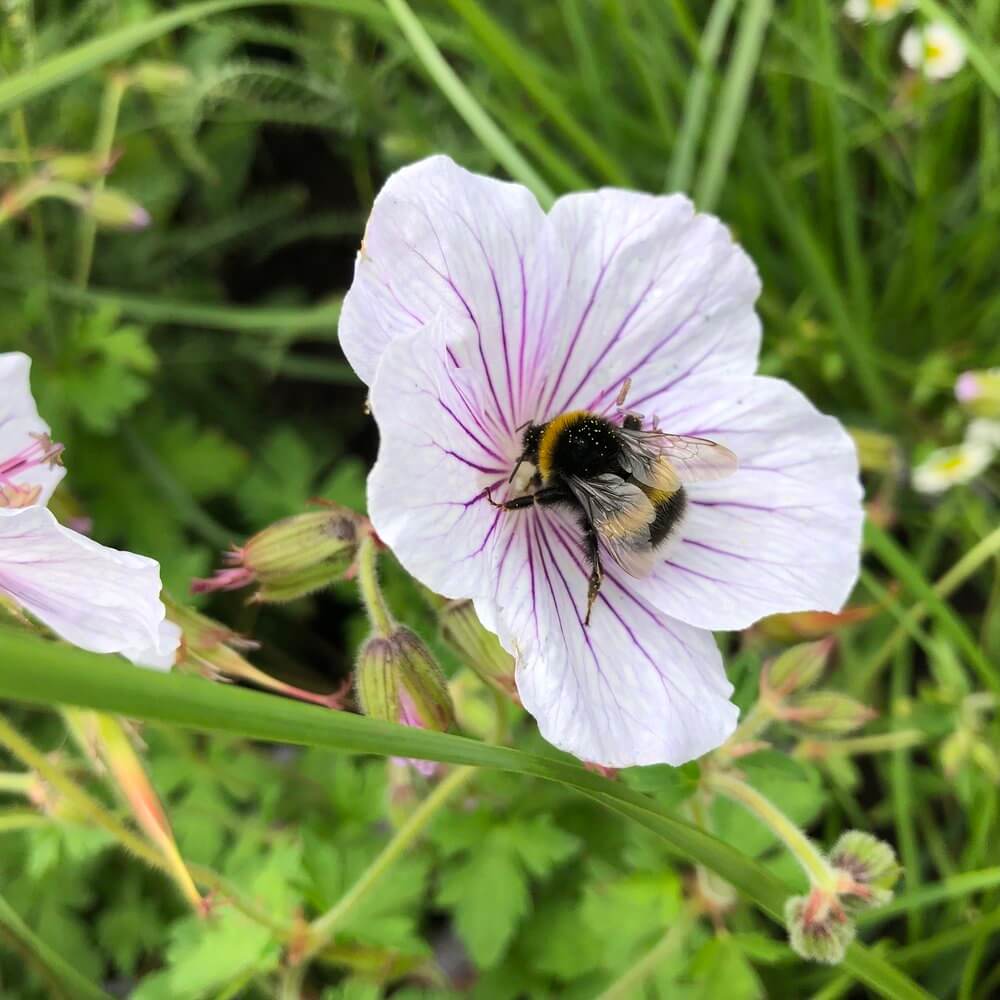
Herbaceous Perennials
Acanthus mollis
Actaea
Ajuga
Aquilegia;
Aster (double flowered varieties)
Astrantia
Bergenia
Brunnera macrophylla
Epimedium
Fragaria (strawberries)
Galium odoratum
Geranium (true geraniums not pelargoniums)
Geum
Gillenia trifoliata
Herniaria glabra
Hosta
Phlox
Podophyllum peltatum
Polemonium
Prunella
Rodgersia
Sagina subulata;
Saxifraga
Tellima grandiflora
Veronica
Vinca

Manage your allergy
- If you have a lawn, regularly cut your lawn to prevent it flowering
- Sit on a blanket when sitting on grass & don’t roll in grass if you have eczema.
- Only touch plants whilst wearing gloves
- Avoid morning and early evening when pollen counts are high
- If possible, avoid going outside on warm, windy days during tree pollen season, which runs from February to June. This is especially important near high-pollen trees such as London plane, sweet chestnut, ash, oak, pine, elm, poplar, and ginkgo.
In many streets and public areas, male trees are planted because they do not produce “messy” fruit. As a result, most street trees you encounter are likely male. Street trees are essential, and we need them in our urban environments.
However, we should also encourage more balanced planting that includes female trees. Until this changes, wearing a mask on warm, windy days can help reduce exposure to pollen.
Summary
Selecting the right plants and using them as natural barriers can make a significant difference. As a result, even people with allergies can enjoy a beautiful, plant-filled garden that supports both wellbeing and wildlife. It does not need to feel sterile or plain. In fact, thoughtful planting can help reduce allergens drifting in from nearby gardens.

Let us help you!
Not sure how to go about creating a low allergen garden, we would be happy to help you, so that you can enjoy all seasons just as much as everyone else.
Get in contact with us.